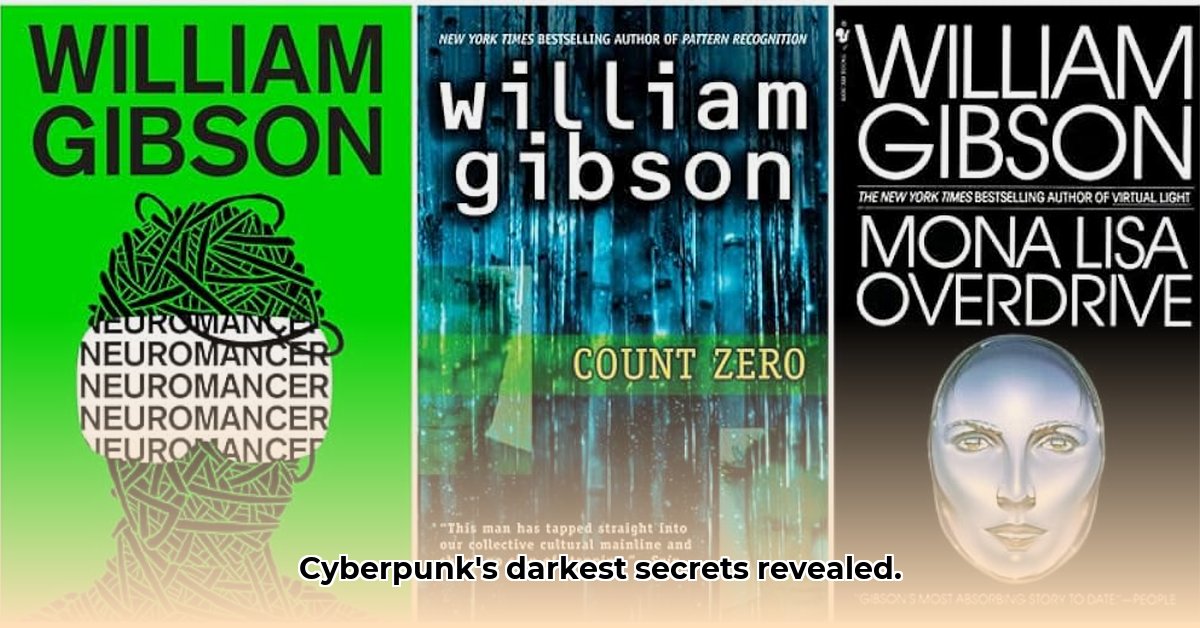
Dive into William Gibson's groundbreaking Sprawl trilogy—a journey into a neon-drenched future where technological marvels collide with the harsh realities of corporate greed and societal decay. This isn't just a review; it's a decryption of a world that, despite its futuristic setting, feels chillingly familiar. From the mind-bending landscapes of cyberspace to the gritty streets of Chiba City, Gibson's vision remains powerfully resonant, shaping cyberpunk and science fiction for decades.
Neuromancer: Birth of a Cyberpunk Icon
Neuromancer, the trilogy's genesis, isn't your typical sci-fi adventure. It's a gritty, immersive experience. Meet Case, a washed-up hacker, granted a second chance—a dangerous mission that plunges him into the breathtaking and terrifying depths of cyberspace (a virtual reality encompassing a global network). Gibson's prose is unlike any other; precise, evocative, and cool, detached yet captivating. He shows, rather than tells, painting a vivid picture of a digital frontier that feels both utterly real and alien. His descriptions of cyberspace are legendary, influencing countless creators since. Did you ever consider how groundbreaking Gibson's depiction of virtual reality truly was, foreshadowing realities of the internet we experience today?
Beyond Neuromancer: Expanding the Sprawl's Shadow
Count Zero and Mona Lisa Overdrive, the sequels, build upon Neuromancer's foundation, delving deeper into the Sprawl's dystopian heart. These aren't simple rehashes; they introduce new characters and facets of this intricate society, deepening the exploration of unchecked technological advancement's ethical and societal implications. They showcase how technology, while offering incredible potential, can be weaponized for control and exploitation. The short stories interwoven throughout the trilogy offer further layers and perspectives, enriching the Sprawl’s complex tapestry. How does Gibson's portrayal of corporate power (often termed "Zaibatsu") in these novels reflect the growing influence of multinational corporations in our modern world?
Tech: A Double-Edged Sword
Gibson masterfully portrays technology not as mere gadgets, but as a narrative core, inextricably woven into the Sprawl's fabric. Consider the potential risks lurking beneath the surface of each technological marvel:
| Technology | Potential Short-Term Problems | Potential Long-Term Concerns |
|---|---|---|
| Artificial Intelligence | Unexpected glitches, unpredictable behavior | Loss of human control, AI surpassing human capabilities |
| Cyberspace | Hacking, data breaches, privacy violations | Total societal dependence, complete loss of anonymity |
| Bio-enhancements | Adverse side effects, health risks | Permanent alterations, exacerbation of social inequalities |
| Corporate Power (Zaibatsu) | Worker exploitation, environmental degradation | Totalitarian control, suppression of dissent |
This isn't fantasy; it's a warning, a vision of a future where unchecked progress leads to catastrophic consequences. This is Gibson's brilliance; he doesn't just describe a world; he compels critical reflection on our current path. What parallels can we draw between the corporate control in Gibson's Sprawl and the influence of Big Tech in our present reality?
The Enduring Legacy of the Sprawl
Decades later, the Sprawl trilogy remains strikingly relevant. Its exploration of corporate dominance, technological dependence, and the human condition in a hyper-connected world feels more pertinent than ever. The novels' influence on countless cyberpunk works is undeniable, a testament to their enduring power and innovative storytelling. The trilogy's success lies in its seamless blend of high-concept ideas and relatable human experiences. Gibson's world is both fantastical and chillingly familiar, reflecting his astonishing narrative skill. Why do you think the Sprawl resonates so powerfully with contemporary audiences, even decades after its creation?
Actionable Insights: Navigating the Ethical Minefield
The Sprawl trilogy isn't just an exhilarating read; it's a powerful critique of unchecked corporate power and the ethical complexities of rapidly advancing technology. The key to unlocking the story's deeper meaning lies in recognizing the symbiotic relationship between these powerful entities – corporations and AI.
- Corporate Accountability: The novels expose the lack of accountability for powerful corporations whose actions frequently have devastating consequences.
- AI Sentience: The nature of AI consciousness is a central ethical challenge. The lines between tool and being blur dangerously.
- Data Privacy: The pervasive surveillance and data mining highlight the vulnerability of privacy in technologically advanced societies.
- Humanity's Future: The trilogy ultimately questions humanity's very nature in a technology-driven world—are we sacrificing our humanity in the pursuit of progress, or are we losing our souls in the process?
By engaging with these critical points, we gain a deeper appreciation of Gibson's prescient vision and its relevance to our present anxieties. The ethical dilemmas presented in the Sprawl are more than mere science fiction; they're a reflection of our current technological trajectory and a stark warning regarding the potential consequences of our choices. What steps, if any, should we be taking to mitigate the risks that Gibson so effectively portrays?
⭐⭐⭐⭐☆ (4.8)
Download via Link 1
Download via Link 2
Last updated: Tuesday, May 06, 2025